
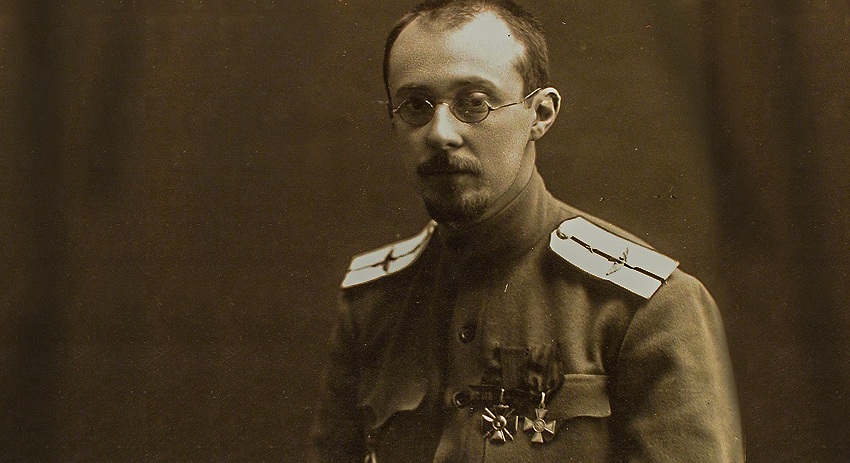
When Russian physicist and mathematician Alexander Friedmann published his groundbreaking mathematical solutions to Einstein’s equations in the 1920s, he unveiled a revolutionary reality: our universe is dynamic, expanding, and evolving-contrary to the rigid dogma of the Soviet Union. Within a decade of his untimely death, Friedmann’s legacy was buried, and the study of an evolving universe was effectively banned across the Soviet state. What should have been a golden age for Soviet theoretical astrophysics instead devolved into a cautionary tale of dogmatic overreach.
The political suppression began as Joseph Stalin’s regime sought to enforce total ideological uniformity across every domain of intellectual life, including the hard sciences. Marxist-Leninist doctrine postulated a dialectical materialist universe that was strictly infinite, eternal, and static in its overall nature.
Consequently, party ideologists dismissed the Big Bang model as a counter-revolutionary “bourgeois conspiracy”. They insisted that Georges Lemaître’s expanding Universe was invented on the personal order of the Pope to legitimize the Biblical creation of the world. Under immense political pressure, Soviet physicists were forced to either fall in line with these claims or risk public denunciations, loss of work, and political persecution.
To mark the centennial of Friedmann’s work, theoretical physicist Alexander F. Zakharov of the Bogoliubov Laboratory for Theoretical Physics in Dubna, Russia published a paper detailing this dark chapter in scientific history. Zakharov’s study is a tribute to Friedmann’s groundbreaking 1922/1924 solutions to Einstein’s equations and tracks how his work was completely buried by political orthodoxy for decades before finally receiving global and domestic recognition.
We reached out to Dr. Zakharov to discuss ideological censorship, lost scientific breakthroughs, and lessons learned of keeping politics out of physics.
Universelost.com: In your view, do you think Soviet ideologists genuinely believed the Big Bang theory was a religious conspiracy ordered by the Pope, or was that just a convenient excuse to control the scientific narrative?
Alexander F. Zakharov: “I think Soviet ideologists and philosophers did not believe that the Big Bang Theory was a religious conspiracy ordered by a Roman Pope, but they wanted to be as useful as possible to the Soviet authorities. Therefore, they did not believe that anyone (a foreign philosopher or a priest) could express their own opinion, and not the opinion of their superiors.
One of the founders of physical cosmology was Georges Lemaître, who was not only a Catholic priest, but was well aware of not only the general theory of relativity, but also the data of astronomical observations, which led to the fact that in 1927 based on his model of the expanding Universe he theoretically derived the law now called Hubble.”
Universelost.com: Looking at how Alexander Friedmann’s work was completely buried for decades by his own country, how do you think cosmology would look today if it wasn’t so?
Zakharov: “The de facto ban on research in the field of physical cosmology in the Soviet Union in the 1930s and 1960s had an extremely negative impact on the development of research in this field. Soviet ideologists even criticized the work of the greatest Soviet theorists, such as Tamm, Landau, Ginzburg, who later received the Nobel Prize, as well as such world-famous scientists as Efrat Lifshitz and Yakov Zeldovich.
Even world-renowned scientists faced restrictions on publishing their cosmological work. Therefore, many lesser-known scientists preferred to either repeat the Soviet philosophers’ pronouncements that the universe is infinite in time and space or pursue research in other fields.
For example, the cosmic microwave background (CMB) radiation was discovered by Tigran Aramovich Shmaonov in 1957 at the Pulkovo Observatory—long before Penzias and Wilson’s discovery. Shmaonov’s supervisor, Professor Semyon Khaikin, despite knowing, in my opinion, that his student had confirmed the predictions of Gamow’s Big Bang theory, chose not to publicize this fact. Khaikin had previously been fired from Moscow University for citing Mach’s works in his mechanics textbook, and was subsequently fired from the Moscow Engineering Physics Institute (MEPhI) and the Lebedev Physics Institute because he deviated from the official position on methodological issues.
Thus, the start of research in the field of physical cosmology was artificially delayed for about 30 years and despite the active work in the field of Zeldovich’s group, Russian scientists played the role of catch-up.”
Universelost.com: You mentioned in the paper that Russian scientists are historically underestimated globally. Based on your research, do you feel this is entirely self-inflicted by past political isolation or something else?
Zakharov: “Previously, I believed that the achievements of Russian scientists were underestimated in the world community due to national or ideological bias or due to past political isolation.
Analyzing this issue, the last Russian Nobel laureate in physics, Ginzburg wrote several decades ago that Soviet physicists received approximately 10 times fewer Nobel Prizes than American ones. If Soviet scientists had nominated their compatriots at roughly the same rate as scientists from other countries, Soviet scientists would have received approximately five times fewer prizes than American ones. That is, Soviet (Russian) scientists are approximately half as likely as the average to nominate worthy works by their compatriots for international awards.
The same applies to citations. Russian colleagues often prefer to cite foreign authors even when they know full well that domestic ones take precedence. I know this well from my own experience.”
Universelost.com: What do you think is the biggest lesson today’s scientific community should learn about what happens when politics tries to dictate physics?
Zakharov: “Politicians shouldn’t dictate what research scientists should conduct by citing ideological arguments or arguments related to the practical application of scientific results. When managers dictate what science scientists should pursue, they find symptoms of wrestlers whose hands are tied.
Any interesting science leads not only to remarkable discoveries but also to the creation of new technologies. For example, in the 1930s, at the Ioffe Institute in Leningrad, research in atomic physics and liquid crystal physics was deemed unpromising.
Many years ago, I gave a lecture on black holes at the Beijing Planetarium. Afterward, a journalist from a Chinese newspaper approached me with a remarkable digital camera and asked what the benefit of observing black holes was. I told him that this camera was the very reason for the usefulness of astronomical observations, as astronomers needed better and cheaper CCD matrices, and now people all over the world use them. The journalist told me, and now I understand: astronomy is a useful science.”





Leave a Reply