
As we go about our daily lives on Earth, a tiny fleet of human-made objects is silently slipping away into the colossal, ink-black expanses of the cosmos. These spacecraft, some still whispering their data back to us through billions of miles of void and others long since dead, represent the outer boundary of human reach. They are our emissaries to the stars, traveling on trajectories that will outlast our cities, our nations, and perhaps even our species.
To understand their journey is to confront the terrifying, beautiful scale of the universe. In space, distance is so vast that miles and kilometers lose their meaning; instead, we measure their journeys in “light hours”, the time it takes for their signals, traveling at the speed of light, to bridge the gap back to Earth.
Here is the current state of humanity’s furthest outliers, our past ghosts, and our ambitious future scouts.
The Active Vanguard: Whispering from the Interstellar Dark
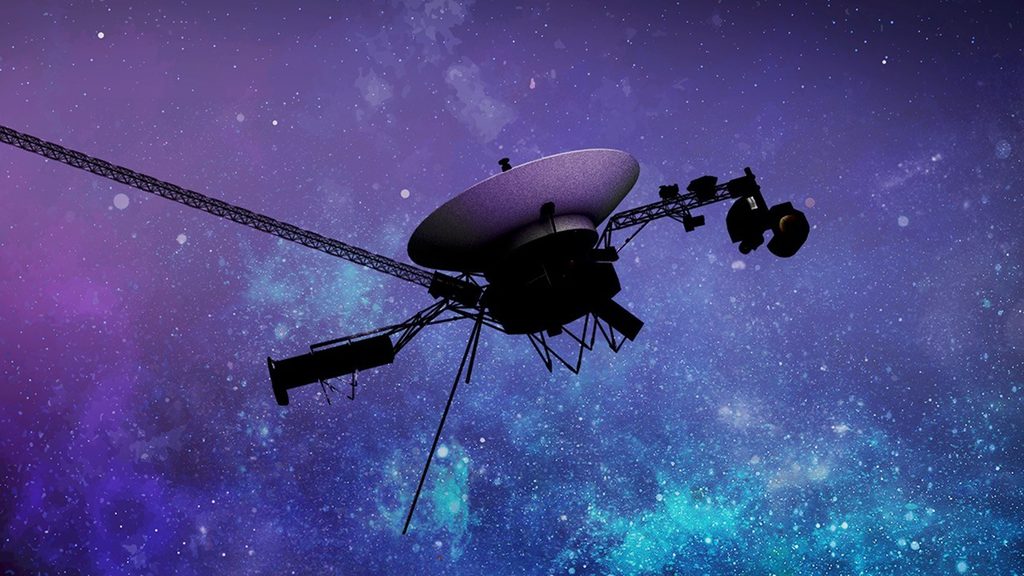
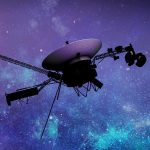
At the absolute vanguard of human exploration is Voyager 1. Launched in 1977, it is now the most distant human-made object in existence, hovering nearly 23.9 light-hours from Earth (approximately 15.2 billion miles or 24.5 billion kilometers). Think of it this way: when engineers at NASA send a command to Voyager 1, it takes almost an entire day just for the signal to arrive, and another day for the spacecraft’s reply to reach our antennas. Currently gliding through the truly interstellar medium, the active probe is on a trajectory that will bring it within about 1.6 light-years of the star Gliese 445 in roughly 40,000 years.
Its sister ship, Voyager 2, also remains active, tracing a different path out of our solar system’s plane. It is currently about 19 light-hours away (12.6 billion miles / 20.3 billion kilometers). In roughly 42,000 years, Voyager 2 will pass within 1.7 light-years of the star Ross 248, and on a much longer timeline, approximately 296,000 years, it will make its closest approach to the star Sirius (Canis Major).
Bolted to the side of both Voyagers is perhaps their most famous payload: the Voyager Golden Records. These 12-inch, gold-plated copper phonograph records were designed as a “bottle in the cosmic ocean,” carrying a diverse capsule of Earth’s story for any intelligent extraterrestrial life that might find them. Curated by a committee chaired by Carl Sagan, the records contain 115 images, natural sounds (like thunder, wind, and animal calls), spoken greetings in 55 languages, and a 90-minute playlist of eclectic musical traditions—ranging from Bach and Beethoven to Chuck Berry and traditional folk songs from around the globe.
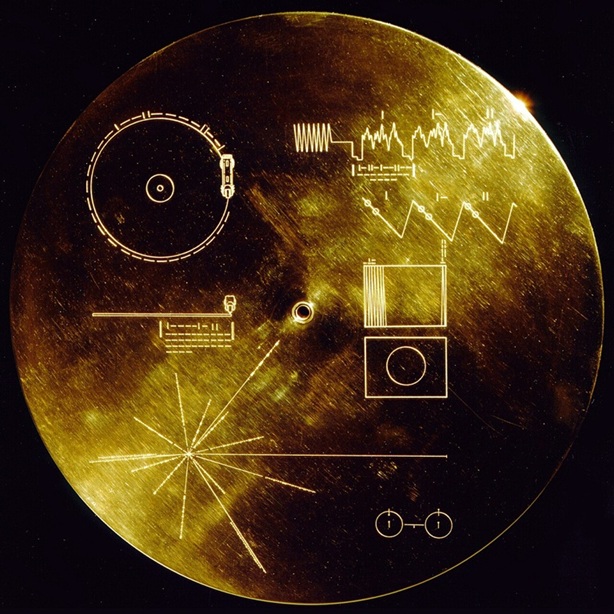
As the Voyagers slowly lose power and go silent in the coming years, these glittering discs will transform into humanity’s most enduring monuments, carrying our story into the deep galaxy for billions of years.
Much closer to home but still deeply embedded in the outer frontiers is New Horizons, the spacecraft that gave us our first close-up look at Pluto. Now traveling through the cluttered, icy graveyard of the Kuiper Belt, the probe is 8.2 light-hours away (5.5 billion miles / 8.8 billion kilometers). Unlike the Voyagers, New Horizons is not currently heading toward any specific star, but it continues to actively scan the dark for Kuiper Belt objects, pushing further into the unknown.
The Silent Ghosts: Monuments in the Void
Not all of our interstellar travelers are still speaking to us. Two of our earliest pioneers have gone completely dark, transformed into drifting, silent monuments.
Pioneer 10, launched in 1972, is currently about 11.6 light-hours away (12.4 billion miles / 20.0 billion kilometers). It sent its last signal to Earth in 2003 and has been coasting in silence ever since. In approximately 90,000 years, it will pass the star HIP 117795, continuing on a slow, 2-million-year journey toward the red giant Aldebaran in the Taurus constellation.
Its companion, Pioneer 11, is roughly 10.4 light-hours away (11.1 billion miles / 17.8 billion kilometers). Having lost touch with Earth in 1995, it drifts silently toward the star TYC 992-192-1, which it will pass in about 928,000 years, on its way toward Lambda Aquilae—a journey estimated to take 4 million years.
Guardians of the Planets: Active and Inactive Outposts
While some probes break for the stars, others were designed to be swallowed by the worlds they came to study, defying the harshest planetary environments in our solar system.
The famous Cassini/Huygens mission remains a landmark of planetary exploration. Resting 1.3 light-hours away (886 million miles / 1.4 billion kilometers), the mission has been over for years. On September 15, 2017, the Cassini spacecraft was intentionally crashed into Saturn’s crushingly dense atmosphere to prevent contaminating its moons. Meanwhile, its piggyback traveler, the Huygens probe, remains exactly where it landed on January 14, 2005: resting silently on the freezing, orange-tinted surface of Saturn’s moon Titan, its batteries long since drained.
Closer to us, at about 35 to 40 light-minutes away (391 million miles / 628 million kilometers), are our Jovian explorers. NASA’s Juno remains highly active, braving intense, corrosive radiation to orbit and study Jupiter’s deep atmosphere and moons. Near Juno rests the ghost of the Galileo spacecraft, which was also intentionally crashed into Jupiter on September 21, 2003, to protect the icy moon Europa.
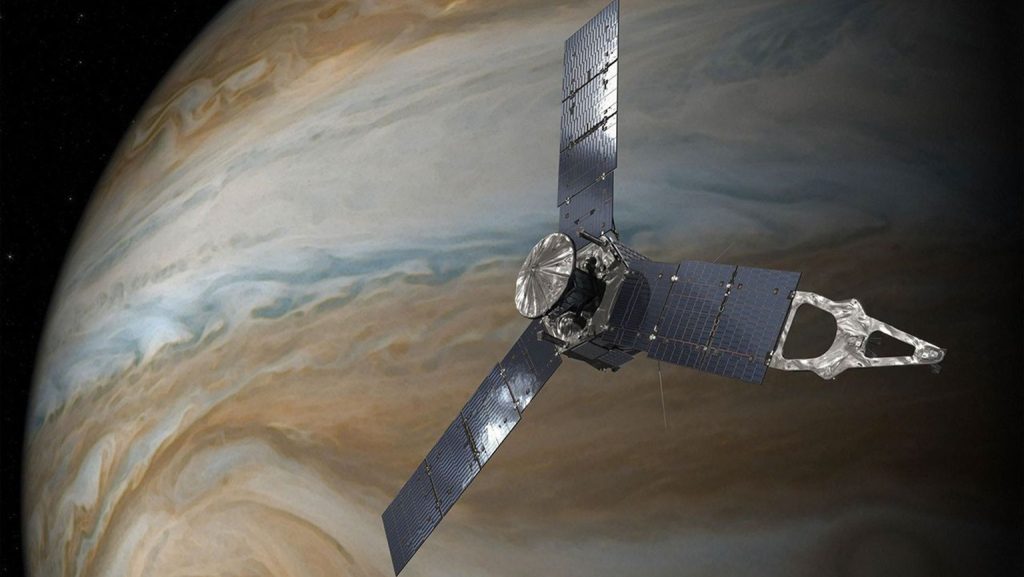
But how Juno has managed to persist in Jupiter’s brutal, unforgiving environment when others could not come down to a radical leap in spacecraft engineering?
“Well, it was well-designed,” Scott Bolton, Juno principal investigator from Southwest Research Institute (SwRI) in San Antonio told Universelost.com. “We invented some things associated with protecting it from the high-energy radiation. We created what we call the radiation vault in the middle of the spacecraft that was surrounded by a lot of shielding, and then inside were the sensitive electronics. I don’t think any other spacecraft had ever been designed that way. And that seems to have worked really well since then.”
Thanks to this heavily armored vault, Juno has been able to keep its virtual eyes open, sending back unprecedented science and imagery from the giant planet’s orbit.
The Next Horizon: The Fermi Explorer Mission
Humanity’s appetite for the deep has not been sated. Looking to the future, scientists are planning the ambitious Fermi Explorer Mission. Aiming for a launch by the end of 2029, this planned endeavor has a staggering goal: to pass within just 0.044 light-years of Alpha Centauri, our nearest star system.
Even utilizing advanced propulsion concepts, the journey to Alpha Centauri will take an estimated 77,500 to 80,000 years. Crucially, the mission doubles down on a human cultural legacy, viewing itself not just as a science scout, but as a time capsule for the future. Beyond scientific instruments that are yet to be chosen, its 1-kilogram payload cube will carry a modern copy of the iconic Voyager Golden Record, alongside an international archive featuring 300-character messages written by children from around the world.
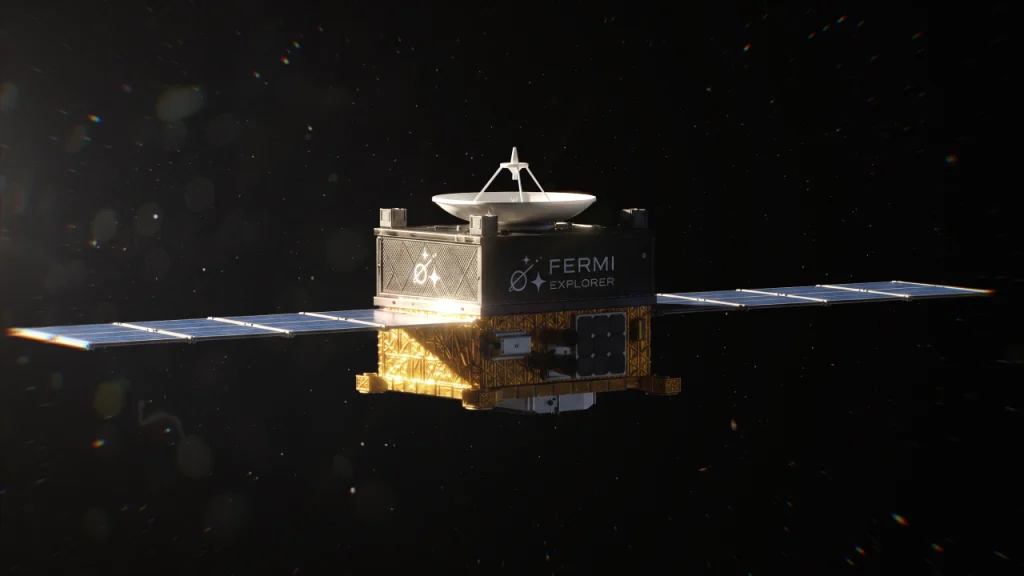
Preparing a message to survive the wear and tear of an eighty-thousand-year journey into the deep is an unprecedented engineering challenge, requiring materials that can resist interstellar degradation.
“We plan to engrave the messages directly into durable metal parts of the spacecraft. Interstellar space is dry and empty, which supports long-term preservation,” Garrett Jameson, co-founder and program manager of the Fermi Explorer Mission told Universelost.com.
By directly carving these hopes, dreams, and historical records into the metal frame of the craft itself, the mission ensures our tiny voices will endure long after our physical memory has faded.
When the Fermi Explorer launches, it will join our silent armada, a testament to human curiosity that will drift through the cosmos long after the hands that built it have returned to the dust.


Leave a Reply