
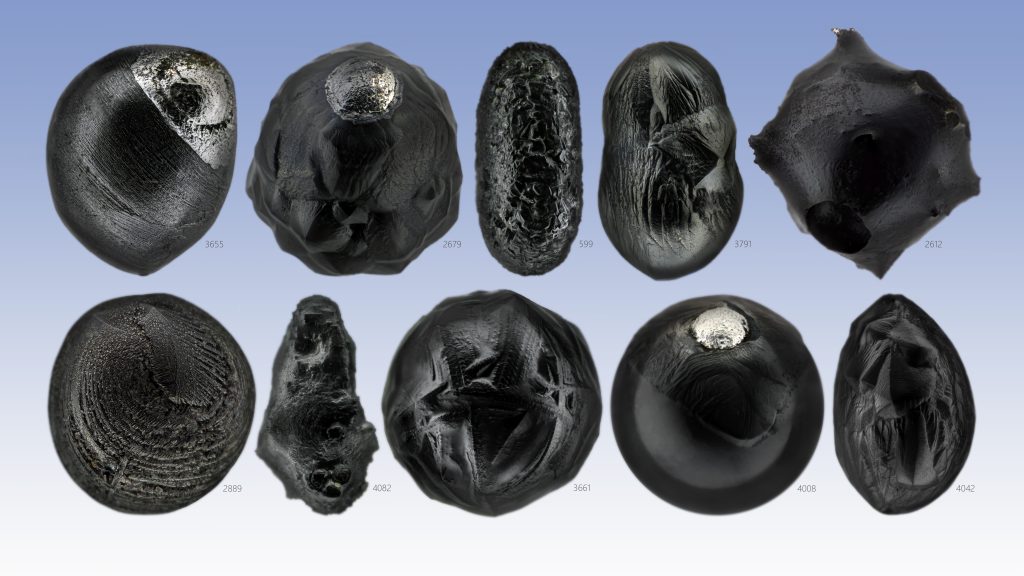
They are the oldest solid matter in existence and have travelled farther than anything else. They form the building blocks of galaxies, planets, and even us. We are all made of stardust. For more than a century, scientists have searched for the mysterious micrometeorites, but they have been found only in extremely clean, remote locations, such as Antarctic blue ice, or, more recently, in space.
Contrary to popular belief, micrometeorites are not ablated fragments of larger meteorites. Instead, they are tiny cosmic dust particles that travel through space, sampling parent bodies and materials not found in other collections. They may also include presolar grains and interstellar matter. None of the nine known micrometeorite types is directly linked to any known meteorite type.
Many efforts have been made to identify these small mineral particles from space in populated areas, but a confusing array of similar-looking terrestrial objects remains a major obstacle. Not long ago, the scientific consensus was that most cosmic dust particles would burn up in the atmosphere. If they survived, they would disintegrate within weeks or months in the harsh terrestrial weather. Additionally, it would be impossible to distinguish one micrometeorite from countless other particles.
After an incident in 2009, when a tiny black dot landed on my breakfast table, I initiated a systematic research project on dust samples from populated areas, known as Project Stardust. After reviewing the scientific literature on cosmic dust and micrometeorites, it became apparent that it was rife with contradictions, discrepancies, and paradoxes. One recurring detail was that the cosmic dust influx amounts to a staggering 100 metric tonnes per day, yet it is impossible to recover any of it. Additionally, most micrometeorites are between 0.05 and 2.0 millimetres in size and contain iron oxides, which make them magnetic.
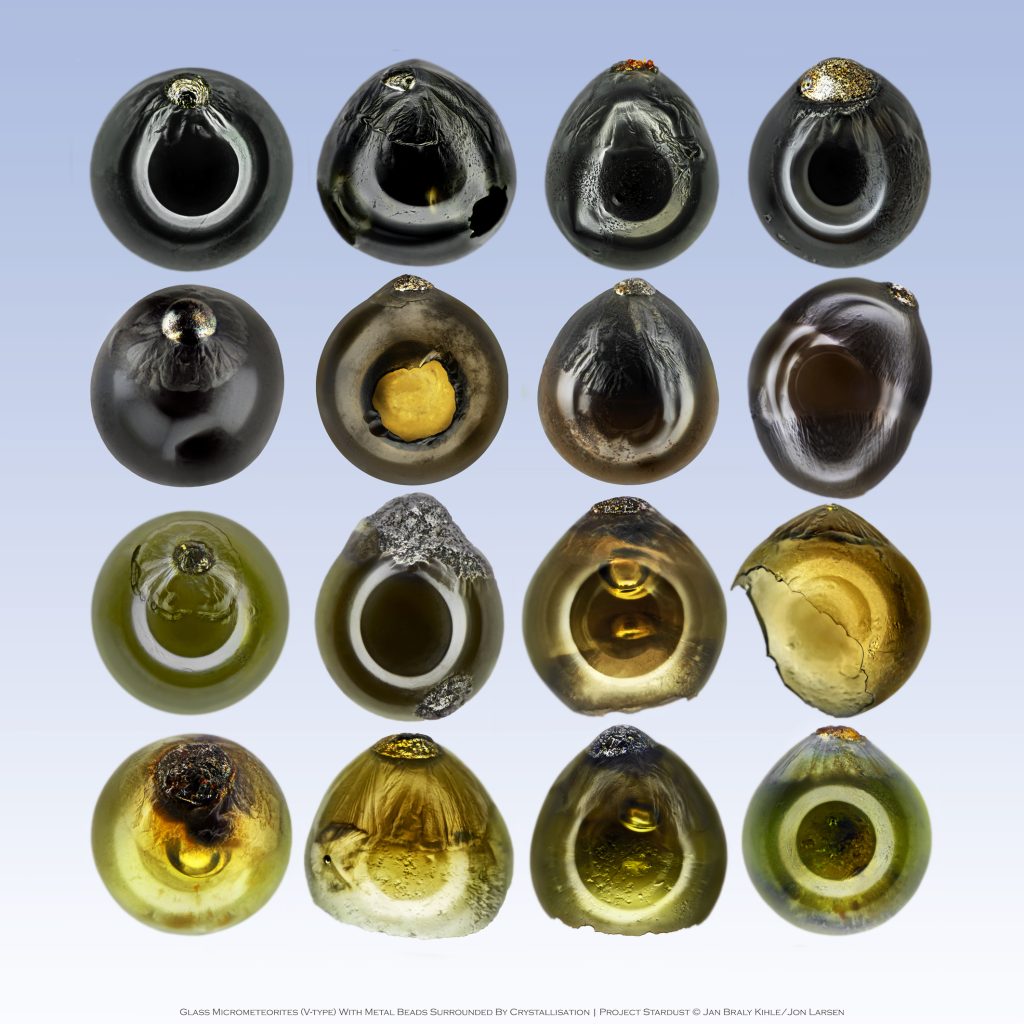
Initially, I examined sky-facing hard surfaces where particles could accumulate over time, such as roads and car parks in my hometown of Oslo. I collected and studied the magnetic particles using my old Zeiss binocular. Later, I expanded my research to include other cities, countries, mountains, beaches, and deserts — everywhere. A decade later, I reflected on more than a thousand field searches across more than fifty countries on seven continents.
To find micrometeorites and distinguish them from terrestrial dust, we need to know what to identify and what to exclude. This requires microscopy in all its forms. When I began my search, published images of micrometeorites from Antarctica were mainly black-and-white SEM section images, which poorly represented the true appearance of fresh micrometeorites. Regarding terrestrial impostors, there was much speculation but little empirical data. Several citizen scientists had searched roof gutters for micrometeorites, yet none of these efforts has confirmed the presence of any extraterrestrial particles.
For six years, my research focused on identifying all types of microspherules in urban dust. All were confirmed to be anthropogenic and of terrestrial origin. The empirical data were compiled into a journal, and tens of thousands of snapshots from a USB microscope were stored in folders, enabling quick comparison of findings across different environments. Over time, the number of data points increased. At the university, I gained access to the electron microscope, and the research advanced thanks to EDS analysis. From the very beginning, I contacted the few micrometeorite scientists worldwide, and they all responded the same way: just forget it, this is not possible.
The impossible breakthrough came in February 2015, when Matthew Genge of London’s Imperial College confirmed my and the world’s first urban micrometeorite: a subspherical barred-olivine specimen measuring 270µm, with dendritic magnetite crystals scattered across its surface. As Genge said, “This is not possible, but you did it!” The aerodynamic stone was found in a rain gutter, two metres from where a tiny black dot had landed on my table six years earlier. I then began searching for similar stones in other rain gutters and on roofs. From that point, now that I knew what to look for, I found them quite easily.
After the first season, I had collected more than five hundred pristine micrometeorites, including all the most common types. The first scientific publication on urban micrometeorites appeared in January 2017. To explain the apparent impossibility of finding cosmic dust in populated areas, other scientists proposed a curious ad hoc hypothesis: that my findings resulted from a temporary increase in the cosmic influx. That was how unlikely it seemed at the time.
Today, my collection totals nearly seven thousand samples, and the combined urban collections are rapidly surpassing the size of the Antarctic reference collections. With easier access to these astonishing particles from the beginning of time, the field of micrometeoritics has grown substantially, and science centres around the world are frequently publishing remarkable discoveries. The age of stardust is truly here.
Until recently, based on the old and weathered Antarctic micrometeorites, it was thought that identifying micrometeorites solely by their visual appearance and morphology was impossible. Nowadays, with easy access to fresh micrometeorites, we know that it is not only feasible but also possible to deduce their entire formation process. This includes the peak temperature during atmospheric entry and flash heating, spin, entry angle, and velocity, all of which reveal clues about their origins in space. A few years ago, this was considered science fiction.
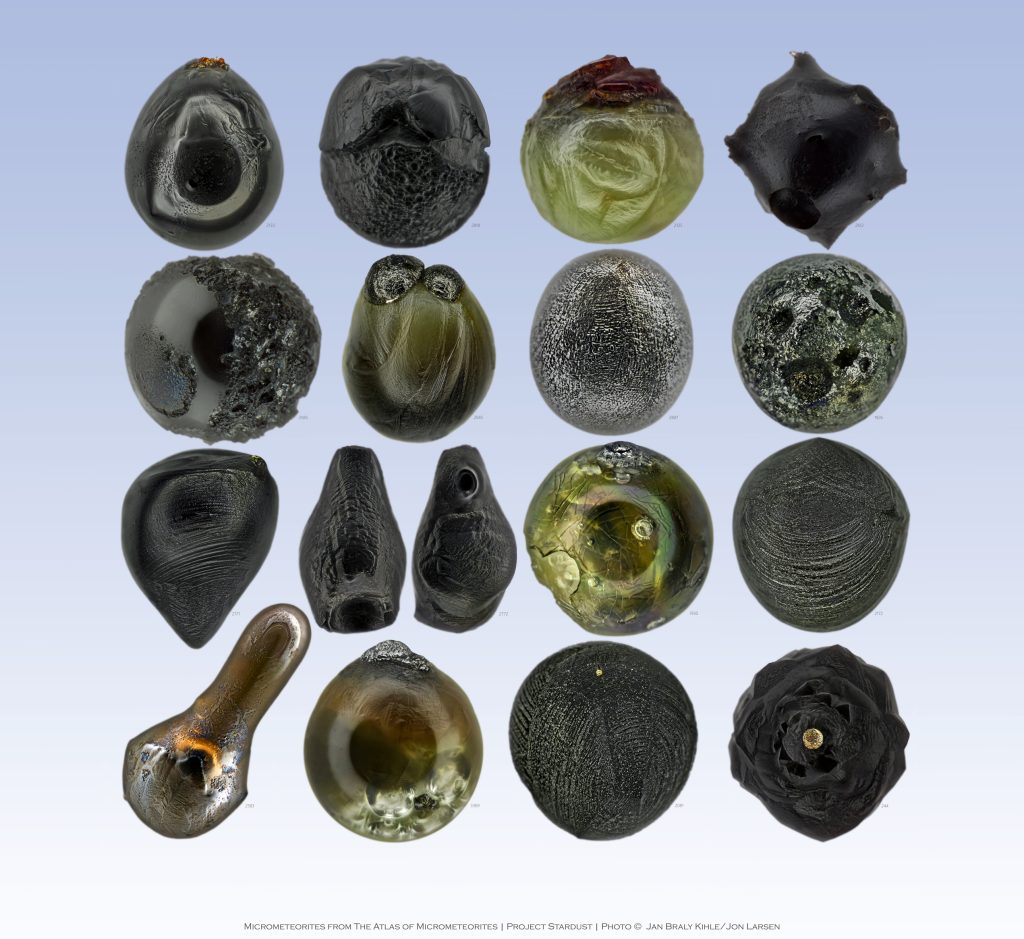
To analyse and document micrometeorites, various methods are employed. To photograph them in high-resolution colour, mineralogist Jan Braly Kihle and I built an optical instrument based on modified Olympus optics and cameras, incorporating both new and prototype components, including hardware and software. Fresh micrometeorites are surprisingly beautiful, like jewellery from space, and high-resolution photos of cosmic spherules are displayed in art galleries and institutions across many countries.
SEM/EDS are the primary tools for micrometeorite analysis. Under reduced vacuum and without coating, we utilise the backscatter function to verify known micrometeorite textures and extraterrestrial origins, and to search for anomalies, platinum-group nuggets, and other distinctive features. The EDS is essential for measuring variations within the chondritic spectrum. Even subtler variations may be detected using the microprobe, which can also assist in seeking clues about the parent bodies in space.
Last month, Luca Bindi from the University of Florence and Paul Steinhardt at Princeton announced the discovery of the first new mineral found in a micrometeorite. It is a copper-aluminium alloy, Al4Cu9, and was named jonlarsenite. They utilised EBSD to determine the crystal structure of the metallic phases, and quantitative elemental analyses were conducted using a field-emission EPMA operating in wavelength-dispersive spectrometry mode. Additional analyses included conventional TEM imaging, selected-area electron diffraction (SAED), atomic-resolution HAADF-STEM imaging, EDS mapping, and SIMS oxygen isotope measurements.
In a project with Grzegorz Zeminiak at the University of Wroclaw, Poland, we used Raman spectrometry to analyse the contents of gas vesicles trapped within glass micrometeorites. The surprising result has not yet been published, but preliminary findings include water vapour and methane. Another still-unpublished experiment involves argon ion microprobe measurements of isotopic ratios across all micrometeorite types. This may offer new clues to their origins in space.
Micrometeoritics is indeed expanding in many directions. Recently, NASA and JAXA have Samples of cosmic dust from asteroids and comets have been retrieved. However, each new discovery raises at least two additional questions. Analyses have now identified more than 70 organic molecules in the cosmic dust, including all twenty amino acids required to build proteins, as well as phosphorus, lipids, salts, and water. This may have provided a comprehensive toolkit for the formation of protocells.
Perhaps further analyses of the smallest particles in the universe could shed light on some of humanity’s most profound questions. Who are we, and where do we come from?
Written by Jon Larsen
Project Stardust, University of Oslo (UiO), Department of Geosciences
Patreon: https://patreon.com/ProjectStardust826
Facebook: www.Facebook.com/micrometeorites



Leave a Reply