
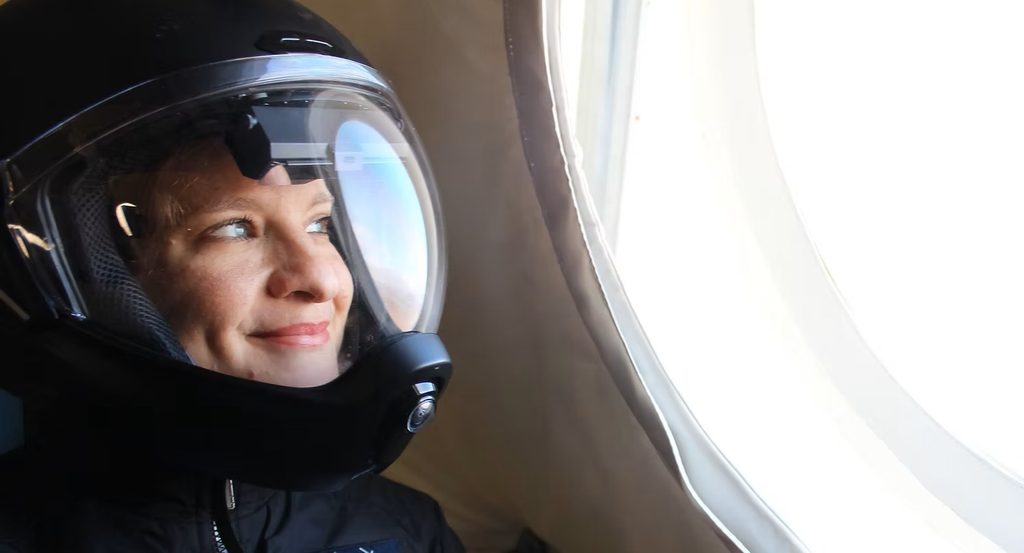
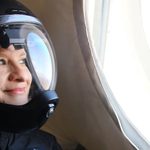
Before we ever set foot on Mars a series of rigorous testing here on Earth is required in order to prepare us for such a demanding journey and hostile environment of the Red Planet. Analog space missions, designed to replicate the harsh constraints, psychological isolation, and operational risks of deep space, are critical to this preparation. Leading this charge in Central Europe is Dr. Michaela Musilová, an internationally recognized astrobiologist, analog astronaut, and former Director of Hawaii’s prestigious HI-SEAS research facility. Having commanded nearly 40 simulated lunar and Martian missions globally, Dr. Musilová brings a wealth of space exploration expertise back to her home country of Slovakia.
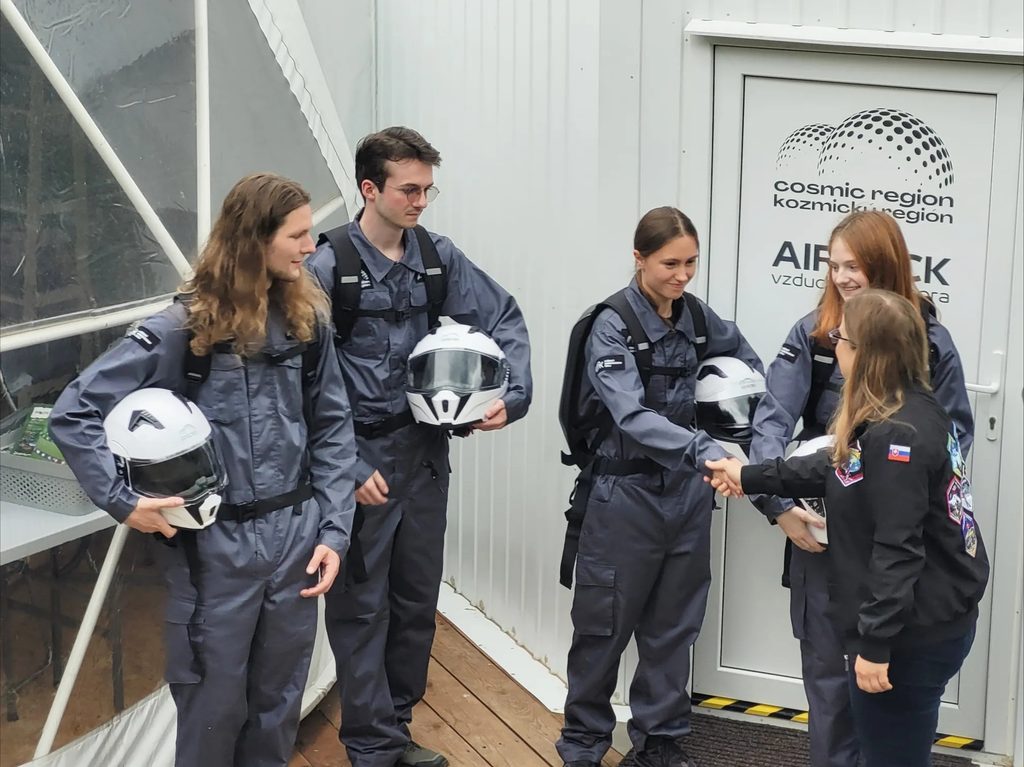
The breakthrough project took shape as a pioneering collaboration between Dr. Musilová and the leadership of the freshly constructed Observatory in Rožňava. Together, they established the Cosmic Region facility and launched MarsonautiSK, a nationwide competition challenging Slovak high school and university students to design scientific experiments and prove their readiness for space. The winning student team earned the privilege of stepping inside the habitat as the country’s first analog astronaut crew on “Mars,” while the runner-up team took on the vital duties of Mission Control back on “Earth.” The simulated mission took place June 10-16, 2026.
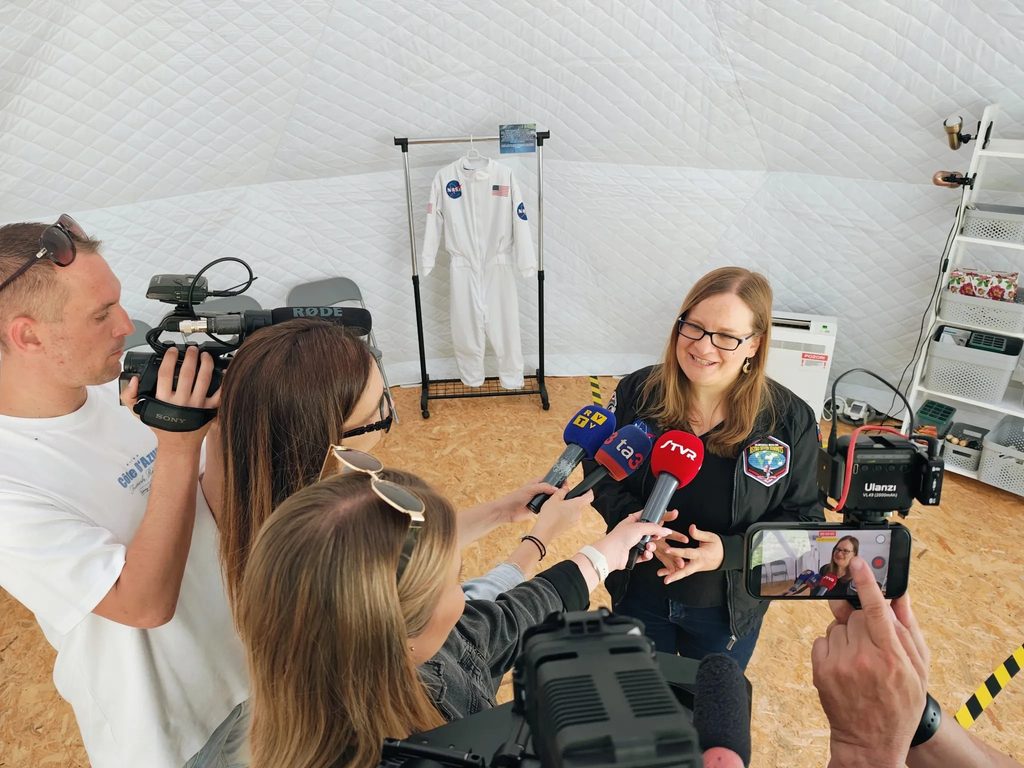
Serving as Flight Director, Dr. Musilová guided these young researchers through realistic operational pressures, from 20-minute communication delays to simulated nocturnal habitat breaches. In this exclusive interview, Dr. Musilová opens up about managing high-stakes emergencies, maintaining strict crew safety, and what Slovakia’s successful simulation means for the future of space research.
Universelost.com: As the Flight Director, you are essentially the ‘brain’ of the whole operation. What was the absolute most stressful moment for you and your team during the simulation?
Dr. Michaela Musilová: The most stressful moment for any Flight Director during a mission, whether simulated or real, is when there are some problems that arise, especially when it’s a health and safety concern. Fortunately, during the simulated Mars mission in Slovakia, we did not have anything of a very serious nature that needed to be dealt with. Even during my time as the Director of the research station HI-SEAS (Hawaii Space Exploration Analog and Simulation) in Hawaii I didn’t have to deal with any major health and safety concerns.
However, before I became Director there, there was a situation where someone was so severely hurt that they had to go to the hospital and be evacuated out of the mission. The emergency situation led to the mission being cancelled. Similarly, there have been cases at other simulated space stations around the world where people had near-death experiences or very serious injuries that did require the mission to actually be stopped or even cancelled altogether.
I’m grateful that I never had to deal with that kind of an issue as a Flight Director before, but I was several times a crew member on a simulated space mission where something serious like that happened, mostly due to the negligence of the people running the facility. In one case, we had to provide first aid for two hours while waiting for help to arrive because, unfortunately, the organizers of the mission had not provided the correct instructions to the first responders to get there in good time. That left us, the crew, to try our best with giving first aid for two hours before professionals reached us.
During the simulated Mars mission in Slovakia, we did not have to face anything like that fortunately. I think the only stressful thing I experienced during this mission was just making sure that everything was running smoothly. There were times when we were having trouble communicating with the crew on “Mars”, and we had to improvise ways to communicate with them or to deal with some unexpected issues. That caused a little bit of stress, but that is absolutely nothing compared to some of those real life-or-death health and safety issues I had to deal with in the past during other simulations.
Universelost.com: How do you make the simulation feel like a real life-or-death space mission? Do you intentionally throw surprise emergencies or equipment failures at the participants?
Musilová: During simulated Mars missions, we really try to make the missions feel real, as if the crew members were truly on Mars. We can’t simulate things like a change in gravity during simulated space missions on land. However, there are research stations underwater where we can simulate a little bit the different aspects of gravity’s effects on astronauts. I was recently the Commander of an underwater mission like that in the Jules’ Undersea Lab in Florida.
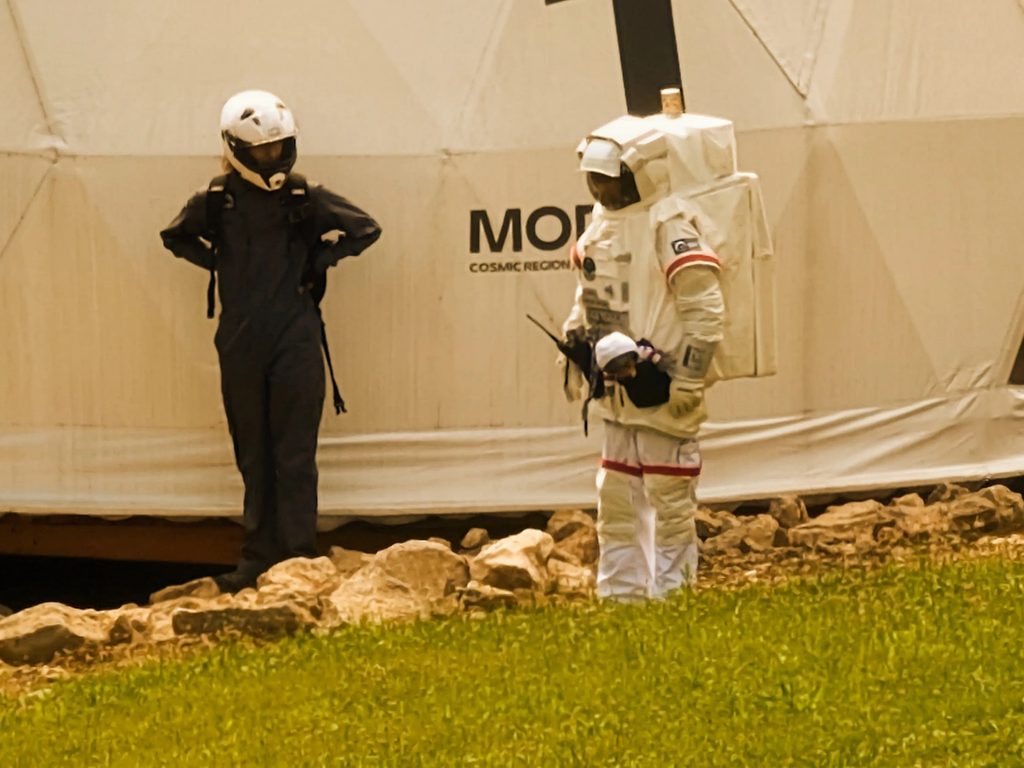
To make the missions feel as real as possible, we isolate the crew so they can’t have contact with anyone on Earth, except via email with a time delay to simulate the time it takes to communicate between Earth and Mars. For their meals they can only eat freeze-dried astronaut-like food. To exit the station, they have to wear simulated spacesuits, etc. Everything that we can simulate, we simulate to make it be as real as possible.
We do draw a strict line when it comes to the health and safety of the crew. While we want these missions to be as real as possible, we do not want to put the crew at any serious risk. There are some small risks we do take, like when the crew go on their simulated spacewalks. An accident may happen when walking over volcanic terrain or there might be some technical failures, but none of it should put the crew in any kind of danger. Most problems should be something solvable by the crew or by technicians on site without disturbing the mission. We definitely want to make sure that we don’t compromise the safety of the crew at any time and they should never actually feel like they’re in a life-or-death situation. Ultimately, they are human beings that volunteered to take part in these types of missions, and we have to treat them with the respect and dignity they deserve.
Since we do these missions for research purposes, we do create several different surprise emergencies and equipment failures to make the missions more realistic. However, they are all done in a way that would never really put the crew at any significant risk to their health and safety. For instance, during the first simulated Mars mission in Slovakia, we simulated a breach in the walls of the station or so-called habitat.
We instantly alerted the crew using special lights inside the habitat. To be sure they understood our warning correctly, we also created a voice-recorded message that was played to the crew. It stressed that there’s a breach in the habitat’s walls, that they’re losing air and that they need to instantly put on their spacesuits. The crew followed the protocol as they were supposed to. Then they went outside on an unexpected, unscheduled EVA or spacewalk to try to fix the problem. It was extra challenging, as it was at night, so they had to find where the breach in the habitat was using flashlights and seal it up.
The simulated emergency mostly served to see how the crew would react under the pressure of having to suddenly put on their spacesuits at night, look for this leak and seal it up. We also did other smaller equipment failures and things like that, mostly to test how they react, to see if they work together well in a team to resolve these problems. It was also to see if the protocols and emergency procedures we put in place are sufficient or if they need to be improved for the future.
Universelost.com: In real Mars missions, it takes about 20 minutes for a radio signal to travel from Mars to Earth. Did you build that time delay into your communication with the crew? If so, how did the team handle it?
Musilová: Yes, we did build in a 20-minute time delay into the communication with the crew. It meant that if the crew sent us a question or a request for help from Mars, it would take 20 minutes for it to arrive at Mission Control on Earth, and another 20 minutes for an answer to come back to the crew. Thus, it would take at least 40 minutes for them to get some kind of help.
We did this on purpose so that the crew would try to be as autonomous as possible on “Mars”, since it would take so long to get help from Earth in the form of an email. Instead of waiting for help from Earth, if it’s an emergency or time-sensitive situation, they have to be able to figure things out themselves. Waiting for 40 minutes for help could actually lead to dangerous or even fatal situations if they were truly on Mars.
That’s the main reason we built the time delay into the simulation, to really make that aspect of communication as realistic as possible. It also helps us see if they’re able to be more self-reliant and if they can problem-solve in these kinds of situations.
The first Slovak crew on “Mars” handled their challenges pretty well. There were times we could tell they were a bit frustrated with the lack of communication or perhaps they didn’t read instructions properly. For instance, at the end of the emergency situation where they had to fix a leak in the habitat, the crew was supposed to send Mission Control evidence that the leak had been sealed. Mission Control would then have let them know once the oxygen levels had been restored to a safe value inside the habitat, so they could take off their spacesuits. However, the crew either didn’t send us the proof or they had some issue sending us the proof of them having sealed the leak, because Mission Control didn’t receive it for a long time.
That led to the crew on Mars to wait for us, thinking that we’re going to let them know anytime soon that they can take off their spacesuits. In reality, we were waiting for evidence from them. In the end, they were just frustrated, sitting on the floor in their spacesuits inside the habitat, trying to figure out what’s going on, until they finally realized that Mission Control never received the evidence that we were waiting for. In the end, they eventually sent it and we were able to let them know that the habitat is safe again and that they can take their spacesuits off.
Overall the crew did a good job, but there were some moments like that when the Mars communication delay was a bit of an issue. That’s how it’s going to be one day on Mars for astronauts, so we have to prepare for it as much as possible, including using simulated space missions to train for that.
Universelost.com: What makes the Observatory in Rožňava a great spot to manage a space mission?
Musilová: The observatory in Roznava is a great place to manage a space mission because it’s freshly built. It only opened last year in 2025 and has a great team on hand that is very eager to make these missions be as successful as possible.
The project started as a collaboration between the heads of the observatory in Roznava and myself. Together we initiated the process of having the station built and then we organized a competition in Slovakia to select the first crew to go on a simulated Mars mission in Slovakia this year in 2026.
It was a nationwide competition for teams of high school and university students to put together a team and convince us that they’re the best team to go on this mission. They also had to propose a scientific experiment that they would perform during their mission on Mars. We chose the best team and experiment in the finale of the competition. Overall, the very first simulated Mars mission in Slovakia went really well and the observatory was well equipped for it.
I was the Flight Director for the mission because I have been the commander of almost 40 simulated missions to the Moon and Mars, and I used to be the Director of the HI-SEAS research station in Hawaii for several years. I used a lot of my knowledge and experiences from having led so many missions to help make the station Cosmic Region in Roznava be as high quality as possible.
One of the things that we still need to improve in the Cosmic Region is to make the landscape be more Mars-like. We’re working on raising more funding to be able to do that, as well as improving things like the spacesuits and some of the other technology inside the station. Otherwise, it is in great shape and ready to take on many more missions.
Universelost.com: What is the biggest lesson your team learned during this simulation?
Musilová: The biggest lesson the crew on “Mars” learned during their mission was simply to problem-solve while being isolated. I think this was a very strong and life-changing experience for high school and university students. They learned so much about themselves, such as how they can deal with various difficult situations and how good of a team member they are. They also learned to put their scientific knowledge to practice by performing their experiment during the simulated mission. That’s why I believe for the crew it was an amazing lesson in many aspects, and I really hope that it will help them in their careers going forward.
It was also a very good learning experience for the Mission Control team. They were the runners-up in the nationwide competition in Slovakia called MarsonautiSK or Marsonauts SK. It was through this competition that we chose the winning team, which became the crew on “Mars”, while the team in second place ended up in Mission Control. For the Mission Control team, it was also a really great eye-opening experience. They learned so much about being good team members, even though they were on a “different planet” to the crew on “Mars”. In Mission Control, they figured out how to provide “the Martians” with vital information to make the mission successful. Additionally, they had to learn to divide responsibilities during their time in Mission Control to make sure that the crew on Mars was well taken care of at all times.
As a whole, when evaluating the mission, I think we mostly focused on where there was room for improvement for future missions at the Cosmic Region. For example, improving the terrain around the station would help make the geology and astrobiology research around the station more realistic. I would also like to improve the simulated spacesuits to make them be more like the ones I helped design at HI-SEAS. Moreover, funding permitting, we would like to include more scientific equipment inside the station. That’s now our biggest task, to find more funding and support to be able to perform future missions and to keep on improving them every time, using feedback from the crews.
Leave a Reply